Panel Encourages 8th Grade to Advocate for Charlotte
January 08, 2026
As the Trinity 8th Grade continues to study needs in Charlotte, from mental health resources to affordable housing, students heard from a panel of speakers who are working to address those needs.
The panel, which took place on Dec. 17, was part of the 8th Grade’s Social Issues Seminar class, in which students are studying advocacy and will soon select topics to discuss with lawmakers during upcoming class trips to Raleigh and Washington, D.C.
While they study how to be advocates, students should send “a clear message that (these issues are) important to your community, and you’re not just going to stop advocating at the end of the school year,” said Meg Fencil, director of engagement with Sustain Charlotte, which engages local leaders on policies dealing with the climate and urban development.
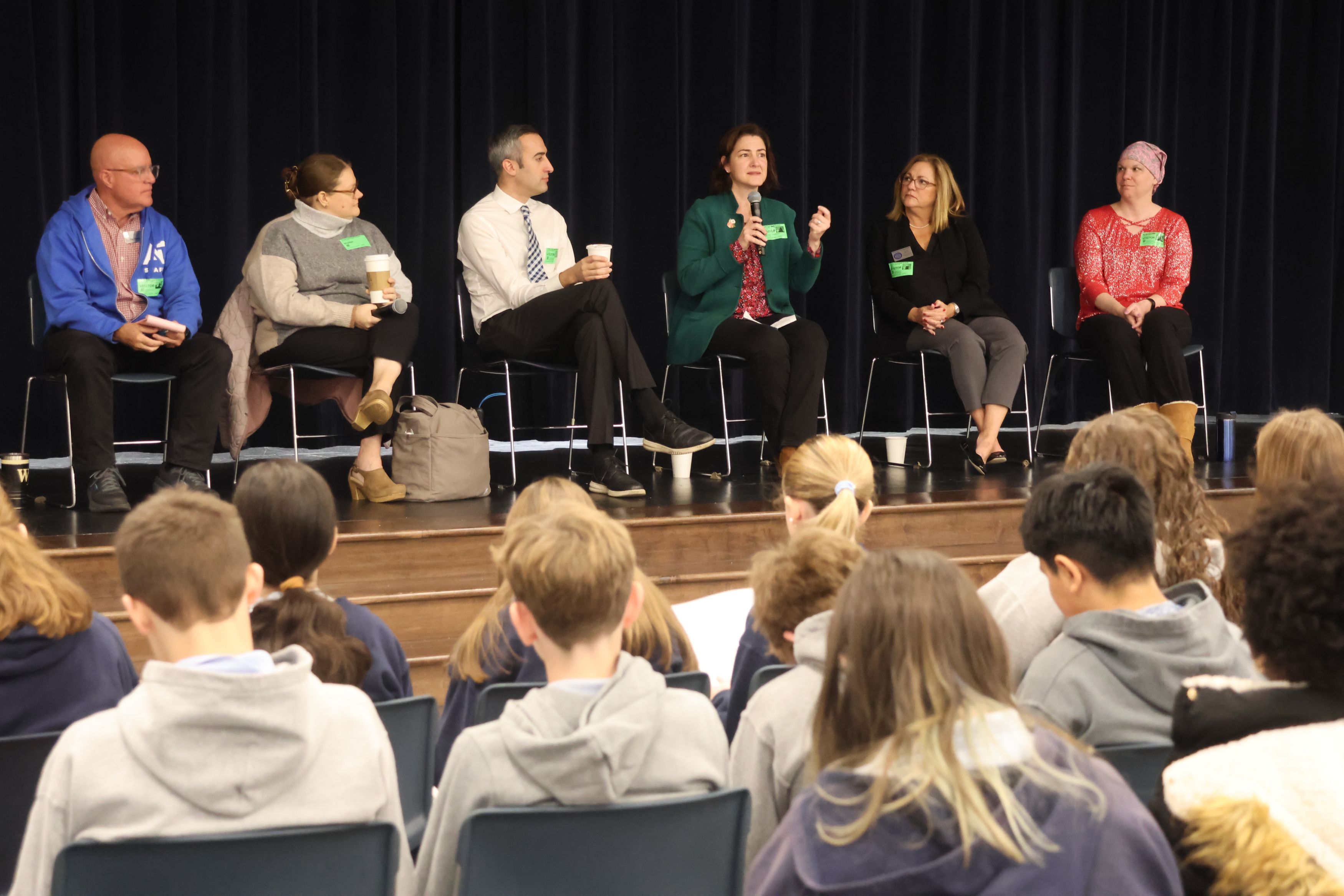
Students also heard from:
- Joe Hamby, Director of Community Education at Roof Above, a service-learning partner of Trinity’s 3rd Grade. The organization serves Charlotte’s unhoused population.
- Erin Chantry, a Trinity parent who is an urban planner with the City of Charlotte
- Joe Bruno, a government reporter for WSOC-TV, whose reporting covers the issues discussed by the panelists.
- The Rev. Emily Parker, executive director of Galilee Ministries of East Charlotte, a service-learning partner of 5th Grade that offers space for community organizations and houses a Nourish Up food pantry.
- Laura Meier, a Mecklenburg County commissioner representing District 5 south Charlotte.
A recurring theme during the discussion was the intertwined nature of the challenges facing Charlotte. For example, the city’s affordable housing crisis is deeply connected with efforts to preserve green space and balancing the need for housing with maintaining natural resources. Speakers also discussed the intersection of mental health resources with public safety and homelessness.
“To solve one means solving the others,” said Meier, adding that the solutions also require funding, which adds a new layer of complexity.
Assistant Head of School for Academics Stephanie Griffin, who moderated the discussion, asked the panel to identify what they considered to be Charlotte’s most pressing issues:
- Bruno: public safety, affordable housing, transportation, including the build-out of a new transportation plan voters approved in a referendum the 8th Grade studied in the fall.
- Chantry: displacement of residents and loss of neighborhood character as Charlotte grows and existing communities become unaffordable.
- Meier: affordability to live in Charlotte-Mecklenburg and land preservation - “our green space is disappearing daily”
- Fencil: affordable transportation options that don’t require a vehicle, such as transit or bicycling, which would allow residents to budget for other necessities, including housing and healthcare.
- Hamby: expanding access to mental health care and deemphasizing the use of jails for providing mental health resources.
- Parker: food insecurity, pointing to the surge in demand for the Galilee Ministries food pantry after cuts to federal food benefits.
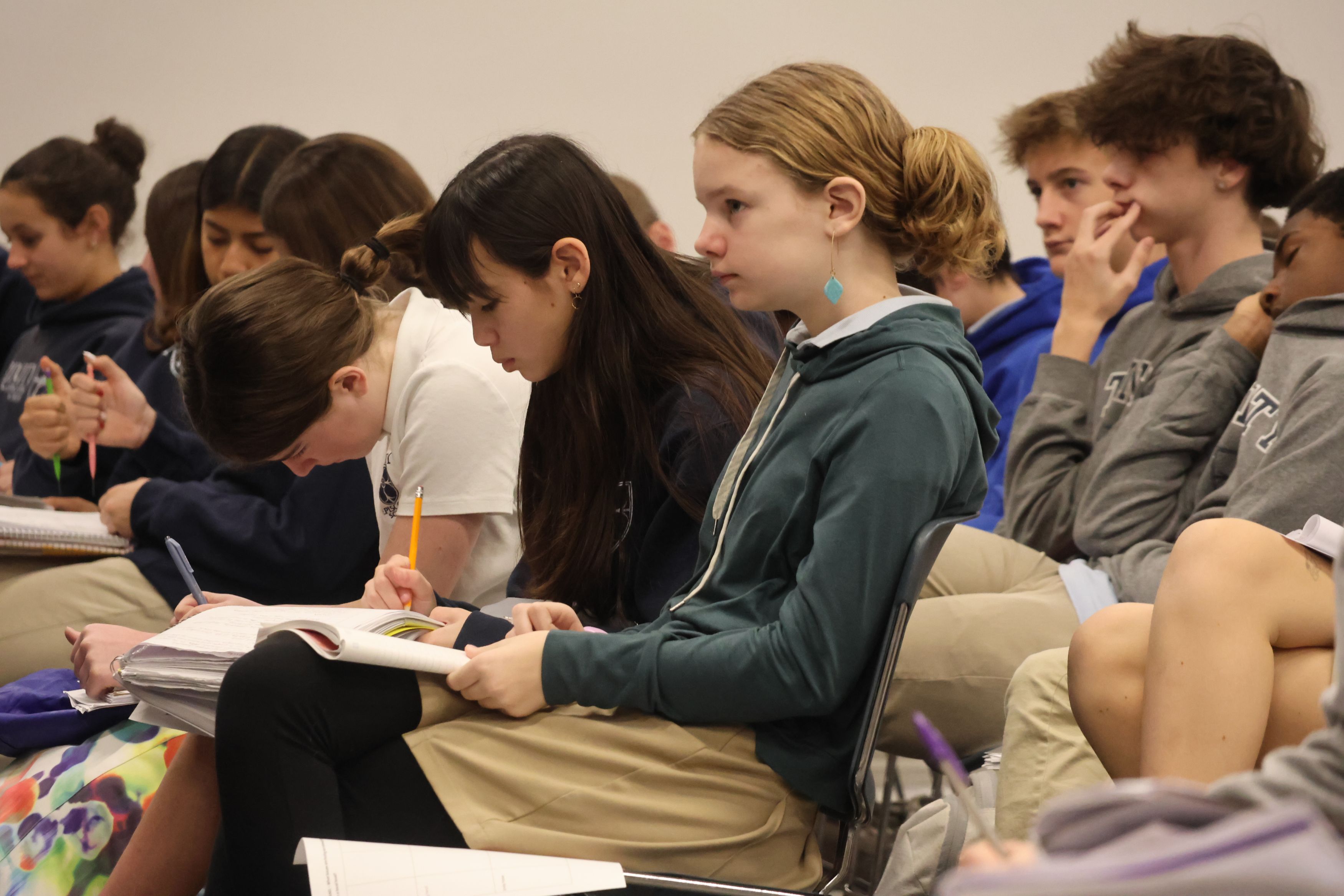
As they learn to advocate, the panel reminded students that it is essential to build relationships with the stakeholders they will meet in Raleigh and Washington, D.C. “That is how you make a difference and really move the needle in this world,” Chantry said.
The discussion provided students with a foundation for their further studies of Charlotte’s needs and for representing Trinity on the state and national stage later this school year.